
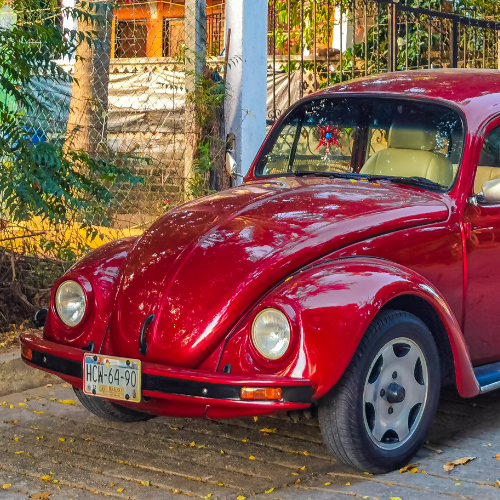


Classic & Exotic Car Insurance
You Didn't Put Years Into This Car to Have It Settled at Book Value.
A standard personal auto policy was designed for a vehicle that loses value the moment you drive it off the lot. Your classic, your exotic, or your custom build doesn’t work that way — and neither should the insurance that protects it. When a standard policy pays a claim on a collector vehicle, it applies actual cash value: a depreciated number based on what the market says a similar vehicle is worth, which for a restored, modified, or rare vehicle may have almost nothing to do with what you’ve actually put into it. Specialty auto insurance for classic and exotic vehicles works on agreed value — meaning you and the insurer establish what the vehicle is worth at the start of the policy, and that’s what gets paid at total loss. No depreciation. No argument. At Mythic Insurance, we place classic and exotic vehicle coverage for Alabama collectors, enthusiasts, and owners who understand that the right policy for a car like theirs starts with a carrier that actually understands what it is.
Standard Policies Pay Depreciated Value. Yours Shouldn't.
Yours Shouldn’t.
A standard auto policy pays actual cash value at total loss — what a comparable vehicle trades for in the current market, minus depreciation. For a vehicle you’ve spent years and significant money restoring, modifying, or acquiring, that number can be a fraction of your real investment. Specialty auto insurance is built on agreed value: you establish the insured value upfront with documentation and appraisal, and that’s the number paid at total loss — with no depreciation applied and no negotiation at claim time.
Built for How You Actually Drive This Car
A standard personal auto policy assumes daily-driver usage and prices accordingly. Specialty collector car policies are structured for the way enthusiasts actually use these vehicles — shows, tours, club events, weekend pleasure driving — with appropriate mileage parameters and usage terms that reflect real-world collector ownership. The result is coverage that’s properly calibrated to how the car lives, not to assumptions built for a commuter vehicle.
The Parts Are Part of the Investment, Too
For restoration projects, custom builds, and vehicles requiring hard-to-source components, the parts inventory can represent thousands of dollars on its own. Specialty auto policies can include spare parts coverage for components, accessories, and restoration materials stored at home — protecting the investment in what you’re building and maintaining, not just what’s registered and on the road.
Coverage That Understands What This Car Is Worth
The Agreed Value Difference — When It Matters Most
Imagine spending four years restoring a 1969 Chevelle SS — sourcing correct-date-coded parts, having the body professionally straightened and painted, rebuilding the engine to factory spec. Then imagine filing a total loss claim and being handed a standard market-value settlement that treats it like any other used car of similar age. That's the actual cash value problem — and it's the reason every classic or collector vehicle owner needs to understand the difference before a loss, not after. Agreed value coverage establishes the insured amount at policy inception based on documentation — appraisal, photographs, purchase records, restoration receipts — and pays that amount at total loss, period. The conversation about what the car is worth happens before anything goes wrong, not during the worst moment of the ownership experience.
Usage, Mileage, and What Your Policy Needs to Reflect
Specialty collector auto policies are written with usage parameters that differ from standard auto policies — and it's important that your policy accurately reflects how you actually use the vehicle. Most classic and collector policies are written for pleasure use: shows, club events, tours, occasional leisure driving. Some allow for driving to and from work on a limited basis. Some exotic vehicle policies have higher mileage thresholds for vehicles that are driven more regularly. The key is making sure the usage terms on the policy match how you actually drive the car — because a claim that occurs during use outside the policy's terms creates complications you don't want. We review that with you at the start of the policy and make sure the coverage fits your actual ownership pattern.
Specialty Towing, OEM Parts, and the Details That Matter
The claims and service features built into specialty collector auto policies reflect the requirements of the vehicles they cover. Flatbed-only towing — rather than standard hook towing that can damage a low-slung classic or exotic — is a feature worth specifically confirming. Coverage for original manufacturer parts in repairs, rather than aftermarket substitutes, matters significantly for collector vehicles where originality affects value. Roadside assistance calibrated for specialty vehicles. Flexible storage coverage for vehicles in climate-controlled facilities or transported to shows on trailers. These are the details that separate a policy written for a collector vehicle from one adapted from a standard auto form — and they're the details we specifically review when placing coverage for our Alabama collector clients.
⭐⭐⭐⭐⭐ What Our Clients Are Saying
"I've got a '67 Mustang fastback that I've been building for six years. When I tried to insure it through my regular auto carrier, they wanted to write it at a book value that didn't account for a single dollar of what I'd put into the restoration. Mythic placed it with a specialty carrier at an agreed value that actually reflects the car — confirmed with photos, appraisal, and build receipts. Knowing the number is locked in if something ever happens to it lets me actually enjoy driving it to shows without thinking about insurance."
"I own three collector vehicles — a '71 Chevelle, a '55 Bel Air, and a custom hot rod that's completely one of a kind. Mythic put together a policy that covers all three under one specialty program with a multi-vehicle discount and agreed value on each. They walked me through the appraisal documentation process for each car and made sure the parts inventory in my shop was covered too. I've dealt with other agents over the years who just tried to put these cars on a standard policy. Mythic actually knew what they were talking about."
"I drive a Porsche 911 GT3 and had been carrying it on my regular personal auto policy with my other cars. When Mythic reviewed my program, they pointed out that in a total loss scenario, my standard policy's ACV settlement for that car would likely come in well below what I paid — and significantly below what it would cost to replace it at current market prices. Moving it to an agreed value specialty policy cost me less than I expected and gave me a settlement guarantee that actually matches the car's current value. It's one of those things I'm glad I got sorted before needing it."
Classic, Collector, and Exotic Vehicle Insurance — What It Covers and Why It's Different
Classic and exotic vehicle insurance is a specialty category designed for vehicles whose value, usage patterns, and ownership circumstances fall outside what standard personal auto insurance was built to handle. It covers a broad range of vehicle types — antique and classic cars, muscle cars and collectibles, hot rods, custom-built vehicles, show cars, exotics and supercars, kit cars, and in some cases race cars — with coverage terms specifically written for how these vehicles are owned and operated.
The cornerstone of specialty collector auto coverage is agreed value. At policy inception, the insured value is established through documentation — typically an appraisal, photographs, and supporting records — and locked in as the policy’s stated value. At total loss, that value is paid in full with no depreciation calculation and no market-value dispute. For vehicles that appreciate over time, have significant restoration investment, or carry modification value that standard market comparisons won’t capture, agreed value is not a premium feature — it’s the essential foundation of coverage that actually protects the vehicle properly.
Beyond agreed value, specialty auto policies include features standard policies don’t carry: spare parts and accessories coverage for components stored at home or in a shop; flatbed towing to prevent damage to low-clearance vehicles; original parts requirements in claims settlements; flexible storage coverage; show and exhibition coverage; and in many cases the ability to insure a collection of vehicles under a single policy with multi-vehicle pricing.
Usage terms vary by carrier and policy type. Most classic collector policies are written for pleasure use — shows, tours, club events, weekend driving — with annual mileage parameters. Exotic vehicle policies may be written with different usage profiles depending on how actively the vehicle is driven. It’s essential that the policy’s usage terms accurately reflect real-world ownership habits, and we make that a specific part of every placement conversation.
Alabama’s car culture — from the Barber Motorsports Park show circuit in Leeds to the collector community surrounding Talladega, from the NHRA events to the club scene across the state — means there are thousands of classic, collector, and exotic vehicle owners across Alabama who deserve coverage built for what they actually own.
Our Approach
Vehicle-Specific. Value-Protected. Built for What You’ve Invested in This Car.

Start With Documentation That Establishes Real Value
A specialty auto policy is only as good as the agreed value it's built on. We start by reviewing your documentation — appraisal, purchase records, restoration receipts, photographs — and making sure the insured value reflects the actual investment in the vehicle, not a book value default. For vehicles still in progress, we can discuss coverage appropriate to the current stage of the build and revisit the agreed value as the project develops.

Match the Policy to How You Use the Vehicle
Usage parameters — how often you drive it, what events you attend, whether it's trailered to shows or driven — shape which policy form is the right fit. We discuss your actual ownership pattern before recommending a carrier so the usage terms on your policy are accurate and the coverage is valid in every situation you'd actually encounter.

Place With Carriers That Know Collector Vehicles
Specialty collector auto carriers — Hagerty, American Collectors Insurance, Grundy, and others — underwrite, appraise, and settle claims on these vehicles with a knowledge base that standard auto carriers simply don't have. As an independent agency, we have access to these carriers and the experience to know which program is the best fit for your specific vehicle, collection, and usage profile.
Why Mythic Insurance for Your Specialty Auto Coverage?
Independent Advantage
We're not tied to one carrier. We work with the top specialty collector auto insurers and can compare programs across the market to find the agreed value, usage terms, and pricing that best fits your vehicle and how you own it — whether it's a single show-quality classic or a multi-vehicle collection.
Claims Support From People Who Understand the Stakes
A total loss or significant damage claim on a vehicle you've invested years into is not a routine claim — and it shouldn't be handled like one. We're here to guide you through the process, make sure the documentation supports the agreed value settlement you're entitled to, and advocate on your behalf for a resolution that reflects what the vehicle is actually worth.
We Speak the Language
Agreed value, date-coded parts, flatbed towing, spare parts floaters, club use provisions — we know what these mean and why they matter. When you talk to us about your vehicle, you don't have to explain the basics. We're already there.
Alabama's Collector Community Deserves Better Coverage
From north Alabama's car show circuit to the communities surrounding Talladega and Barber, Alabama has a deep and passionate collector car culture. We serve that community with specialty coverage that matches the seriousness with which Alabama enthusiasts approach their vehicles.
Latest From Our Team
What Insurance Do Contractors Need?Insurance Requirements for Contractors Typically contractors and vendors wanting to secure construction contracts, provide services, or be awarded maintenance contracts are usually required …
Driving Without Auto Insurance in FloridaWhat is Auto Safety Insurance? First, let’s be very clear on one thing, Florida Law requires an owner and operator of a motor vehicle …
How To Protect Personal BelongingsPersonal Belongings and Personal Property A question I get often both from homeowners and renters is “What is considered personal belongings vs. personal property?” …