
Condo Insurance
Your HOA Has a Master Policy. It Just Doesn't Cover Most of What's Yours.
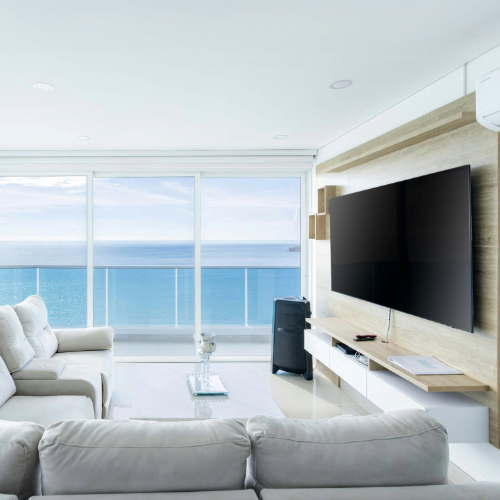

One of the most common misconceptions in personal insurance is that condo owners are covered by their association’s master policy. They’re not — at least not for the things that matter most to them personally. The HOA master policy covers the building structure and common areas. It does not cover your personal belongings, your interior finishes, your liability if someone is injured inside your unit, or the cost of living somewhere else while your unit is being repaired. That’s where your individual condo insurance policy comes in. At Prestige Planning, we help Florida condo owners understand exactly where the association’s coverage ends and where their own policy needs to begin — and we make sure the gap between the two is fully closed.
The HOA Policy Stops at Your Door
Your condominium association’s master policy is written to protect the building — the exterior structure, the roof, the common hallways, the pool, the parking lot. It was not written to protect what’s inside your unit. Depending on how the master policy is structured, it may cover the bare walls and nothing more, leaving your flooring, cabinetry, countertops, fixtures, and appliances entirely outside its scope. Your personal condo policy picks up where the master policy stops — protecting the interior of your unit, your personal property, and your personal liability from the threshold of your front door inward.
Your Furniture Isn't Anyone Else's Problem
If a fire damages your unit and destroys your furniture, electronics, clothing, and personal belongings, the association’s insurance will not replace a single item. Personal property coverage on your condo policy is what pays for that. It applies to your belongings whether they’re damaged inside the unit or in some cases away from home — a laptop stolen from your car, for instance, or luggage lost on a trip. For Florida condo owners who have invested in quality furnishings and electronics, understanding that coverage limit and making sure it reflects replacement cost — not depreciated value — is a conversation worth having.
Loss Assessments Arrive Without Warning
When your condo association faces a covered loss that exceeds the HOA master policy limit — or levies a special assessment to cover a major shared loss — each unit owner may be billed their proportionate share. That bill can arrive without warning and can run into thousands of dollars. Loss assessment coverage, which is typically available as an add-on or included in condo policies, covers your share of those assessments up to your policy limit. It’s one of the most overlooked elements of condo ownership — and one of the most valuable to have when you need it.
Coverage Built Around the Way Condo Ownership Actually Works
Understanding Bare Walls vs. All-In Master Policies
Not all HOA master policies are structured the same way, and the difference matters significantly for how you build your individual condo policy. A "bare walls in" master policy covers only the structural elements of the building — studs, drywall framing, wiring, plumbing — and leaves everything from the interior wall surface inward as the unit owner's responsibility. An "all-in" or "single entity" master policy covers fixtures, flooring, and built-in appliances within the unit. Knowing which type of master policy your association carries determines how much interior coverage your personal policy needs to provide. We review your HOA documents as part of the quoting process so that your individual policy is built correctly for your specific association's structure — not just a generic assumption.
Liability Coverage Inside Your Unit
If a visitor slips and falls inside your unit, if a pipe in your unit leaks and damages the unit below yours, or if your child causes accidental damage to a neighboring unit, your personal liability exposure is real — and it is entirely separate from the association's liability coverage, which protects the common areas only. Personal liability coverage on your condo policy addresses your exposure for bodily injury and property damage that originates within your unit. For Florida condo owners in multi-story buildings where a plumbing incident can affect multiple units below, this coverage is particularly important and particularly easy to undervalue until something goes wrong.
Additional Living Expenses When You Can't Be in Your Unit
Fire, water damage, a covered structural repair — any event that makes your unit temporarily uninhabitable creates an immediate practical problem. Where do you stay while repairs are being made? Additional living expenses coverage on your condo policy pays for reasonable temporary housing costs — a hotel, a short-term rental, comparable accommodations — while your unit is being restored. For Florida condo owners whose units are in buildings where restoration timelines can stretch for weeks depending on the nature of the damage, this coverage is what keeps a difficult situation from becoming a financial one.
⭐⭐⭐⭐⭐ What Our Clients Are Saying
"When I bought my condo in Homewood, I just assumed the HOA covered everything. My agent at Prestige Planning was the first person who actually sat down and explained the difference between what the association's policy covers and what I was personally responsible for. I had no idea the interior of my unit — the floors, the cabinets, the fixtures I'd upgraded — wasn't covered by the HOA at all. We put together a policy that fills every gap. It was an eye-opening conversation that I wish I'd had on day one."
"I've lived in a condo in Huntsville for three years and honestly just bought the cheapest policy I could find because I thought the HOA had most of it covered. When I switched to Prestige Planning and they actually reviewed my HOA documents, I found out I had a bare walls master policy and my previous personal policy barely covered anything inside the unit. We rebuilt the coverage from scratch. It costs me less than $20 more a month than what I was paying before and I'm actually covered now."
"I downsized to a condo after my kids left home and it's been a wonderful decision — except that nobody explained to me what loss assessment coverage was or why I needed it. The building I'm in had a roof claim that exceeded the HOA's master policy limit and every unit owner got a $4,200 assessment bill. I had loss assessment coverage on my condo policy. My neighbors who didn't have it paid out of pocket. That alone was worth every premium I've ever paid to Prestige Planning."
What Does a Condo Insurance Policy Actually Cover?
A personal condo insurance policy — sometimes called an HO-6 policy — is designed specifically for condominium unit owners and addresses the exposures that the HOA master policy does not. It is distinct from homeowners insurance, which covers a standalone structure, and from renters insurance, which covers personal property but not any portion of the dwelling.
The core components of a condo policy include dwelling coverage for the interior of your unit — the walls-in portion that the HOA master policy may not address, including flooring, cabinetry, countertops, light fixtures, and interior finishes. The amount of dwelling coverage you need depends on the structure of your HOA master policy and how much of the interior is your responsibility to insure.
Personal property coverage pays for your belongings — furniture, clothing, electronics, appliances, and other personal items — when they’re damaged by a covered event such as fire, theft, water damage from a burst pipe, or storm-related damage. Choosing replacement cost coverage rather than actual cash value ensures you’re paid what it would cost to replace items at today’s prices, not the depreciated value of items that may be years old.
Personal liability coverage protects you if someone is injured inside your unit or if your unit causes damage to another unit or to the building. Liability claims in multi-unit buildings can involve multiple parties and significant dollar amounts — particularly water damage claims that flow from one unit to others below.
Additional living expenses coverage pays for temporary housing when your unit is uninhabitable due to a covered loss. Guest medical payments coverage handles reasonable medical expenses for visitors injured in your unit, without requiring a liability claim.
Loss assessment coverage — one of the most important and most commonly overlooked condo coverages — reimburses you for your share of special assessments levied by the HOA when a covered loss exceeds the association’s master policy limits.

Our Approach
Unit-Specific. Gap-Focused. Built Around What the Association Policy Leaves Behind.

We Start With Your HOA Documents, Not a Generic Quote
The right amount of personal condo coverage depends on your specific association's master policy structure. We ask to review your HOA master policy before finalizing your coverage recommendations — because the difference between a bare walls policy and an all-in policy changes the dwelling coverage number significantly. Starting with a generic estimate rather than your actual HOA documents is how condo owners end up with gaps they don't discover until a claim.

We Set Coverage at Replacement Cost, Not Guesswork
Personal property limits that were set years ago may not reflect what it would actually cost to replace your belongings today. We walk through a realistic assessment of your furnishings, electronics, clothing, and valuables to make sure your personal property limit is grounded in actual replacement cost — not a default number on a quote form.

We Explain What You're Buying Before You Buy It
Condo insurance is more nuanced than most personal insurance lines because of the HOA master policy layer. We take the time to explain exactly what each coverage on your policy does, how it interacts with your association's coverage, and what situations it would and wouldn't apply to — so you understand your program before you ever need to use it.
Why Prestige Planning for Your Condo Policy?
Independent Advantage
As an independent insurance agency, we work with multiple carriers and can compare condo policies across the market to find the coverage structure and price that's the best fit for your unit, your HOA type, and your personal property profile. You get options — not a single take-it-or-leave-it quote.
Claims Support When You Need It
Filing a condo claim — especially one that involves coordination between your personal policy and the HOA master policy — can be complicated. We're here to help you navigate the process, understand which policy responds to which portion of the loss, and advocate for a fair and timely resolution on your behalf.
Knowledge of the Condo Insurance Gap
Most condo owners don't fully understand where HOA coverage ends and personal coverage begins until they file a claim. We've had that conversation hundreds of times and we know exactly what questions to ask, what documents to review, and what coverage gaps to close before a loss occurs.
Serving Florida's Growing Condo Market
From downtown Birmingham and Huntsville's revitalized urban core to the lake communities of north Florida and the growing residential developments across the state, Florida's condominium market is expanding. We understand the specific characteristics of condo ownership in this market and serve unit owners across the state.