
Flood Insurance
Your Homeowners Policy Doesn't Cover Flooding. Not One Inch of It.
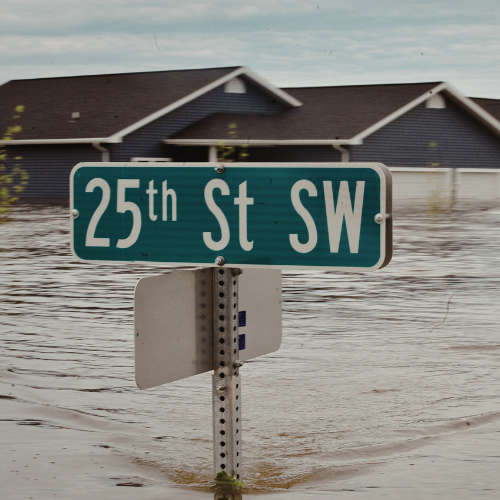
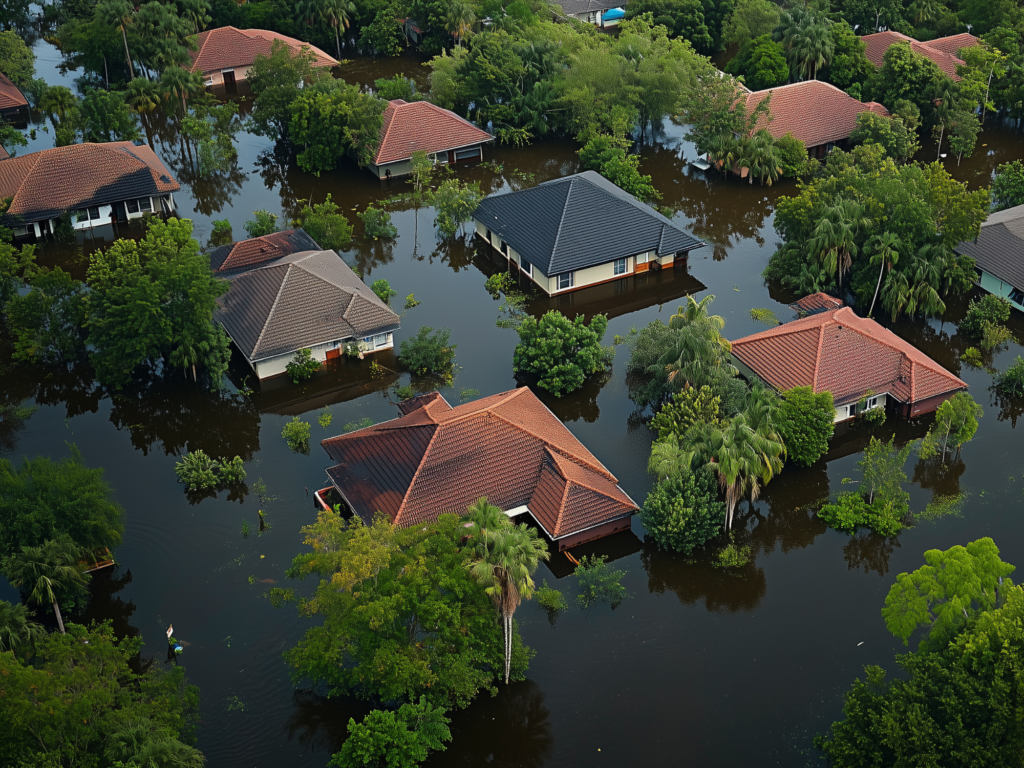
Flood damage is explicitly excluded from every standard homeowners policy in the country — no exceptions, no gray area. If water enters your home from the ground up — storm surge, overflowing rivers, saturated soil, backed-up drainage, or heavy rainfall accumulation — your homeowners policy pays nothing. Florida sees significant flooding every year across every region of the state, and the majority of flood losses occur outside of high-risk zones, which means homeowners who assumed they were low-risk get blindsided. Flood insurance is a separate, standalone policy — and the 30-day waiting period that applies to most policies means the time to get it is well before you need it. At Prestige Planning, we help Florida homeowners close this gap before a loss makes it obvious it existed.
Your Homeowners Policy Won't Pay a Dollar.
Flood is a named exclusion in every standard homeowners policy. Foundation seepage, overland flooding, storm surge, river overflow, drainage backup — all flood losses, all denied. The only coverage that applies to flood damage is a standalone flood insurance policy. If you don’t have one, you are entirely self-insured for one of the most common and costly loss types in Florida.
Low-Risk Doesn't Mean No Risk.
FEMA assigns every property in the country a flood zone designation — but more than 40% of flood insurance claims nationally come from properties outside high-risk zones. Florida’s rainfall patterns, river systems, and topography mean that flash flooding and localized inundation can affect homes that have never flooded before. Being in a low or moderate-risk zone doesn’t mean a flood can’t reach you — it just means it hasn’t yet.
The 30-Day Wait Is Real.
Most flood insurance policies — including NFIP policies — carry a 30-day waiting period before coverage takes effect. You cannot purchase flood coverage in response to a forecast, an approaching storm, or a flood already in progress. By the time the water is rising, it’s too late. This is coverage that only works for people who got it ahead of time.
What Flood Insurance Covers — and What It Doesn't
Building Coverage — The Structure Itself
The building coverage portion of a flood policy covers the physical structure of your home — the foundation, walls, floors, systems (electrical, plumbing, HVAC), appliances, and built-in features. This is the largest and most important component of a flood policy. Coverage limits through the NFIP go up to $250,000 for residential structures; private flood carriers may offer higher limits for homes that require more coverage.
Contents Coverage — Your Belongings
When a business vehicle is involved in a serious accident, the liability exposure doesn't stop at the cost of repairs. Medical bills, lost wages for the injured party, legal defense costs, and potential settlements can reach six figures or more. Without adequate commercial auto liability limits, your business assets — not just the vehicle — can be at risk. The right coverage ensures that one bad day on the road doesn't threaten everything you've built.
NFIP vs. Private Flood Insurance
The National Flood Insurance Program (NFIP), administered by FEMA, is the most common source of flood coverage and is available to any homeowner in a participating community. Private flood insurance carriers offer an alternative — often with higher coverage limits, broader terms, shorter or no waiting periods, and additional living expenses coverage that NFIP policies don't include. Depending on your property, flood zone, and coverage needs, one or the other may be a better fit. We present both options so you can make an informed choice.
⭐⭐⭐⭐⭐ What Our Clients Are Saying
"We've lived in our home in Decatur for nineteen years and never flooded — so we never thought much about flood insurance. After a heavy rain event backed water into our finished basement, we found out our homeowners policy covered nothing. The remediation alone was over $28,000 out of pocket. We called Prestige Planning the following week and have had flood coverage ever since."
"I'm in a moderate-risk zone, not a high-risk zone, so my mortgage company never required it. Prestige Planning explained that most flood claims in Florida come from moderate and low-risk zones — and that made the decision easy. The annual premium was less than I expected and now I don't think about it when a storm rolls through."
"I knew flood wasn't covered by homeowners but I kept putting off getting a separate policy. After the flooding in Shelby County a couple of years back, I stopped putting it off. Prestige Planning compared NFIP and private options for my property and helped me pick the right one. Took less than thirty minutes. Should have done it years earlier."
What You Need to Know About Flood Insurance
Flood insurance is a standalone policy — separate from your homeowners policy — that specifically covers damage caused by flooding. It covers what your homeowners policy explicitly excludes and cannot be purchased as an add-on or endorsement to an existing policy.
Coverage has two components: building coverage for the structure and systems of the home, and contents coverage for personal property inside the home. Each has its own limit and deductible, and both must be specifically selected — building coverage alone does not protect your belongings.
Policies are available through the NFIP or private flood carriers. NFIP policies have standardized coverage terms and limits ($250,000 for residential buildings, $100,000 for contents). Private flood carriers can offer higher limits, additional living expenses coverage, and in some cases more favorable terms depending on the property’s flood history and zone classification.
Florida’s geography makes flood risk meaningful across the entire state — not just in coastal or riverside areas. Gulf storm surge along the coast, tidal flooding around Tampa Bay and Sarasota, low-lying inland neighborhoods, and flat terrain with heavy summer rains all create real, documented flood exposure for communities throughout Florida. Heavy rainfall events routinely cause flash flooding in areas with no prior flood history.
The 30-day waiting period on most policies is not negotiable. Plan accordingly.

Our Approach
Zone-Aware. Coverage-Complete. Built Around Florida’s Real Flood Risk.

We Compare NFIP and Private Options
One size doesn't fit every property. We present both NFIP and private flood options with honest comparisons of coverage terms, limits, waiting periods, and cost so you can choose the policy that actually fits your home.

We Cover Both Building and Contents
Many homeowners buy building coverage and skip contents. We make sure both components are discussed and deliberately chosen — not accidentally omitted.

We Get It in Place Before It Matters
The 30-day wait means timing is everything. We move quickly and make the process straightforward so coverage is active well before any reason to need it.
Why Prestige Planning for Flood Insurance?
Independent Advantage
We work with both NFIP and private flood carriers and can compare options across the market — giving you a real choice rather than a single-path quote.
Claims Guidance When It's Worst
A flood loss is one of the most disruptive events a homeowner can experience. We're here to help you navigate the claim, document the damage, and push for a fair settlement.
We Know Florida's Flood Picture
From the river communities of north Florida to the Gulf Coast, Florida has diverse and real flood exposure. We understand it and explain it clearly.
One Gap You Shouldn't Leave Open
Flood is the most common natural disaster in the United States and the least covered by standard homeowners policies. Closing that gap is one of the most straightforward things a Florida homeowner can do.